ICM is a continuation of CPD from term 4. It is the same department and the small group sessions are structured similarly. My overview of CPD can be read here. Each small group session will focus on one patient encounter. In contrast to CPD, ICM small groups place a heavy emphasis on teamwork during the patient encounter.
As a part of the ICM class, 5th term students go to the hospital rotations at St. George's General Hospital, a variety of private practices in the local Grenadian community, and the Mt. Gay Psychiatric Hospital. Although the hospital visits take up to 4 hours per week, it was the most enjoyable part of my week. My group consisted of 5 5th term students. Each week, we were assigned to a new preceptor/doctor and a new rotation/department so that we got exposure to a variety of fields. Some of my favorite rotations were pediatrics and emergency medicine.
During the pediatrics rotation, we we not only got to interact and examine babies that were a few hours old, but we also were lucky enough to see a delivery. The preceptor we had for the pediatrics rotation provided insight on his lifestyle, the most common emergencies, and gave each member of my team a chance to individually examine a newborn. I remember learning about the moro reflex and the positive Babinski sign that is seen in babies during the neuroscience class. However, after performing both test on two newborns, I will never forget how these two tests are performed. I am very grateful to have had the exposure to the pediatrics unit in Grenada.
During my group's emergency medicine rotation, we were able to interview and examine 2 different patients. Apart from seeing typical cases that come to the emergency room, the experience also showed me the high-paced activity that is part of an emergency room.
Some of the other rotations that we had the opportunity to rotate through were internal medicine, psychiatry, surgery, ICU, OB/GYN, and orthopedics. The SGU administration does a great job making sure that students get a diverse experience during their time at St. George's General Hospital. I'm grateful for all the helpful preceptors and cooperative patients we saw. These rotations are getting me excited to start clinical rotations soon in the United States!
In terms of grading, we had 2 SOAP notes based on 2 patient encounters that we had during our hospital visits, 1 team OSCE quiz, and 1 final individual OSCE similar to the one that we took in term 4. The nice thing about ICM is that it is a shorter course compared to the rest of the term 5 classes. So, the final OSCE is not taken during finals week. It is typically scheduled right before the second set of midterms. I thought this was a huge benefit because I was able to dedicate more time to pharmacology and preparing for BSCE/NBME after ICM ended.
Thank you for reading and have a wonderful day! :)
~N

Term 5 Complete and Goodbye Grenada!
First, I just wanted to give a shout out to J who successfully completed term 4 a few days ago! J, I know you worked very hard this term and I am proud of you. Best of luck in term 5, my friend!
Now, an update from N:
I just finished up 5th term (yay!!!), packed up all my things in Grenada, said one final goodbye to the island that I called home for the past 2 years, and moved back to US. I apologize for the lack of posts for the last few months as I worked my way through term 5. The semester consisted of 4 main classes, BSFCR, Pathophysiology, Pharmacology, and ICM. I will try my best to get posts out on all these classes shortly.
Term 5 was definitely not as busy as term 4. However, I found myself spending a lot of time reviewing old material and preparing for the USMLE/Step 1 exam. Compared to term 4 which consisted of one midterm and one final, term 5 has 2 sets of midterms before finals for all classes. For this reason, the term felt like it flew by. I was always studying for some sort of assessment. The last 4 weeks of the term consisted of at least 1 assessment per week because there are 2 standardized exams that all term 5 students must take. The first exam we took was BSCE2. This was a comprehensive, 8-hour exam. Term 5 students must pass this exam to register and take board exams. The second standardized exam we took was a practice 4-hour NBME exam. Our NBME score was incorporated into our grade for Pathophysiology and BSFCR. I would highly recommend future students to start preparing for these exams as early as possible. I found it very difficult to find time to learn all the drugs from pharmacology lectures, keep up with pathophysiology material, and dedicate time to review old material like biochemistry and anatomy from term 1. At this point, I am just grateful to have passed BSCE 2 and be able to take Step 1 in early 2017.
Please visit our blog soon for future posts on specific term 5 classes! If you have any questions or recommendations, feel free to contact me at meyouandsgu@gmail.com or comment below! Thank you for reading and have a wonderful day! :)
~N
Grenada Bound with a Few Hiccups Along the Way...
This is my fourth and hopefully my final trip back to Grenada to complete 5th term. After 1 canceled flight, 2 delayed flights, and 3 baggage ticket confirmation tags for 1 checked bag (yes, 3 tags), I am currently sitting in Miami International Airport about to board my flight to Grenada and praying that my checked bag follows my footsteps. The last 15 hours have been somewhat of a whirlwind of events.
Let me just start by saying that I know I have been pretty lucky. This is my fourth trip to Grenada since January 2015 and I have never had any issues with baggage or delayed flights on my way to Grenada until now. This time, the hiccup in my travel experience began when my direct flight to Miami was canceled for unknown reasons. I knew that I had to get myself to Miami to catch the Miami-Grenada flight. Otherwise, the next available seat on a plane to Grenada is 10 days from now. The entire school returns back to the island around the same weekend in January and August. So, it is difficult to find a last minute seat on a flight to Grenada at that time. After much persistence with the airline company, I was finally put on a flight to Miami with 1 stop in Atlanta. I am so thankful that all the flights today have not been delayed by more than an hour. So, I have been able to catch all connecting flights smoothly.
For any future students, majority of the time, students have no problem flying into Grenada. However, if you are stuck with canceled flights/delayed flights, do everything in your power to catch the flight to Grenada to avoid additional chaos. That is typically the trickiest flight to re-book. Also, I would highly recommend packing a few pairs of clothes and basic necessities in carry-on bags in case the checked bag(s) does not make it to Grenada right away.
Update 1: I safely landed in Grenada. However, my checked bag is either taking a mini-vacation at the beach in Miami or was accidentally put on a wrong flight and sent to see the Statue of Liberty in New York. I am just hoping that it arrives in Grenada within the next few days!
Update 2: Day 4: My bag finally found its way to Grenada with 4 tags! I'm just glad that everything is still intact! :)
Now, let's start Term 5! Hope you are having a great week!
~N
Let me just start by saying that I know I have been pretty lucky. This is my fourth trip to Grenada since January 2015 and I have never had any issues with baggage or delayed flights on my way to Grenada until now. This time, the hiccup in my travel experience began when my direct flight to Miami was canceled for unknown reasons. I knew that I had to get myself to Miami to catch the Miami-Grenada flight. Otherwise, the next available seat on a plane to Grenada is 10 days from now. The entire school returns back to the island around the same weekend in January and August. So, it is difficult to find a last minute seat on a flight to Grenada at that time. After much persistence with the airline company, I was finally put on a flight to Miami with 1 stop in Atlanta. I am so thankful that all the flights today have not been delayed by more than an hour. So, I have been able to catch all connecting flights smoothly.
For any future students, majority of the time, students have no problem flying into Grenada. However, if you are stuck with canceled flights/delayed flights, do everything in your power to catch the flight to Grenada to avoid additional chaos. That is typically the trickiest flight to re-book. Also, I would highly recommend packing a few pairs of clothes and basic necessities in carry-on bags in case the checked bag(s) does not make it to Grenada right away.
Update 1: I safely landed in Grenada. However, my checked bag is either taking a mini-vacation at the beach in Miami or was accidentally put on a wrong flight and sent to see the Statue of Liberty in New York. I am just hoping that it arrives in Grenada within the next few days!
Update 2: Day 4: My bag finally found its way to Grenada with 4 tags! I'm just glad that everything is still intact! :)
Now, let's start Term 5! Hope you are having a great week!
~N
Term 4 Daily Schedule
During my first two terms at SGU, I was lucky to have some amazing upper-term roommates. When I was working my way through term 1, they were meandering their way through term 3/4. Before the term started, my roommates made a tentative schedule of how they were going to manage the material. So, I thought I would be pro-active and do the same before term 4 started. Although their schedule worked for them, the study schedule I made went straight into the trash as soon as the term started. I had planned weeks in advance and I soon realized that it was simply unrealistic.
So, during term 4, I made schedules one week at a time. For each day of the week, I wrote down what I wanted to accomplish. If there were 100 microbiology slides to get through. I would split it up into 3 days to make it more manageable. If there were large units in pathology to review, I would split it up into 2-3 days. During my nightly review of the material, I would try to condense the material to one page of notes. The following is a sample of how scheduled my studying:
7 am - wake up! (ok, it was almost never 7 am, but I would try to wake up at 7am. I had the hardest time waking up in the morning)
8 am - 12 pm - lecture - usually 2 hours of micro followed by 2 hours of path
12 pm - 1 pm - lunch and review pathology lab slide and/or watch CPD video to get a general idea of what to expect in lab.
1-3 pm - pathology lab about 3-4 times a week OR micro lab (on Fridays post-midterm)
3-5 pm - CPD lab only 2 days a week
5-5:30 pm - possible nap, snack, shower, facebook, catching up with news, etc
5:30-8:30 pm - try my very best to finish reviewing micro that was taught in lecture
8:30 pm-9:00 pm - dinner and talk to my family. On many nights, my family would eat dinner at the same time as me and we would all facetime during this time. Meal prep was so important this term. Feel free to read more about my meal prep ideas here.
9:00pm-12:30 am - finish as much path as possible.
12:30 am-1:30am - finish pathology slide for next day and finish an initial pre-view of pathology for the following day. (I almost never did any pre-view of the material for microbiology)
~1:45am - sleep!! :)
Of course there were days that I was up much later than 1:30am to prepare for the next day. Irrespective of what happened during the week, I made sure that I finished reviewing the material over the following weekend. For this reason, I organized schedules one week at a time. This is a schedule that worked for me. However, there were many that woke up extremely early and studied and those that slept periodically during the day.
There is no correct or wrong method of handling the material in term 4. I found this pattern to work for me and I stuck with it. As I mentioned here, the only big study schedule change that I made during term 4 was when and how I used pathoma.
Feel free to let me know if you have any questions/comments.
Hope everyone has a great weekend! :)
~N
9:00pm-12:30 am - finish as much path as possible.
12:30 am-1:30am - finish pathology slide for next day and finish an initial pre-view of pathology for the following day. (I almost never did any pre-view of the material for microbiology)
~1:45am - sleep!! :)
Of course there were days that I was up much later than 1:30am to prepare for the next day. Irrespective of what happened during the week, I made sure that I finished reviewing the material over the following weekend. For this reason, I organized schedules one week at a time. This is a schedule that worked for me. However, there were many that woke up extremely early and studied and those that slept periodically during the day.
There is no correct or wrong method of handling the material in term 4. I found this pattern to work for me and I stuck with it. As I mentioned here, the only big study schedule change that I made during term 4 was when and how I used pathoma.
Feel free to let me know if you have any questions/comments.
Hope everyone has a great weekend! :)
~N
Term 4: Pathology Lab
Presentations, presentations, presentations! It becomes second nature by the end of the term. Pathology lab is a team-based learning experience that consists of presentations on multiple diseases. Pathology labs are usually held 3 or 4 days of the week and follows the material that is taught in lecture. The pathology department releases lab slides the Friday before each lab week. It is the responsibility of the group to divide up the lab slides. Then, during each lab session which is about 2 hours, each student will present on their designated slide/topic. A clinical tutor will be present during the session to answer questions and clarify material.
Pathology groups: Students are allowed to pick their own groups of about 7-8 people for pathology. For my term, we were only allowed to have 7 people per group. This will probably change for future terms. The department recommends gender and ethnic diversity within the group. I was fortunate to be part of an awesome group. I learned so much from my group members and although we complained about the work in term 4, we all worked well together as a group. :)
Slide distribution: The pathology department will assign the number of slides per lab session. Usually it will be about 7 or 8 slides per session/day. Each slide usually correlates to a specific disease/concept. For my group, there was 1 person who was designated as the slide distributer. By Saturday afternoon of each week, all group members were aware of the slides that they would be presenting on for the following week. We tried to divide up the slides up evenly based on the amount of work required. Groups have different methods of dividing up the slides. For us, we used a google excel document to keep everything clear.
Pathology slide: The pathology department will provide images/slides of a disease process or concept. The student responsible for the slide presentation is required to include the following into a slide presentation: identification, morphology/structural changes, disease name, etiology, pathogenesis, signs and symptoms, investigations for diagnosis, course complications, differentials, highlights, and a possible vignette pertaining to the material. I would highly recommend a template. It will save a lot of time in completing the pathology slides. The benefit of making the pathology slide is that I will never forget the slides that I present on to my team.
How much time do you spend on completing your own pathology slide?
Usually, each member of the group will have at least 1 if not 2 lab slides to present per day. At the beginning of the term, students in the term ahead of me said that we should spend a maximum of 20 minutes completing the pathology slide. At the beginning of the term, I spent at least an hour if not more per slide. I found that some diseases are much easier to talk about compared to others. As the term progressed, I was able to cut that time to about 30-45 minutes. Completing my slide for the next day would be the last thing I did before I went to bed every night and I would always make time to review my slide during my lunch break right before the lab session. In term 1, instructors would tell us to try to complete our labs over the weekends. I did not find it possible to do this in term 4. I was never ahead on pathology slides. I tried my best to avoid falling behind. I just had to make sure I was right on schedule.
Although tedious, I have to say that I learned a whole lot more than expected from lab sessions. So, I am thankful for a great group! :)
~N
Pathology groups: Students are allowed to pick their own groups of about 7-8 people for pathology. For my term, we were only allowed to have 7 people per group. This will probably change for future terms. The department recommends gender and ethnic diversity within the group. I was fortunate to be part of an awesome group. I learned so much from my group members and although we complained about the work in term 4, we all worked well together as a group. :)
Slide distribution: The pathology department will assign the number of slides per lab session. Usually it will be about 7 or 8 slides per session/day. Each slide usually correlates to a specific disease/concept. For my group, there was 1 person who was designated as the slide distributer. By Saturday afternoon of each week, all group members were aware of the slides that they would be presenting on for the following week. We tried to divide up the slides up evenly based on the amount of work required. Groups have different methods of dividing up the slides. For us, we used a google excel document to keep everything clear.
Pathology slide: The pathology department will provide images/slides of a disease process or concept. The student responsible for the slide presentation is required to include the following into a slide presentation: identification, morphology/structural changes, disease name, etiology, pathogenesis, signs and symptoms, investigations for diagnosis, course complications, differentials, highlights, and a possible vignette pertaining to the material. I would highly recommend a template. It will save a lot of time in completing the pathology slides. The benefit of making the pathology slide is that I will never forget the slides that I present on to my team.
How much time do you spend on completing your own pathology slide?
Usually, each member of the group will have at least 1 if not 2 lab slides to present per day. At the beginning of the term, students in the term ahead of me said that we should spend a maximum of 20 minutes completing the pathology slide. At the beginning of the term, I spent at least an hour if not more per slide. I found that some diseases are much easier to talk about compared to others. As the term progressed, I was able to cut that time to about 30-45 minutes. Completing my slide for the next day would be the last thing I did before I went to bed every night and I would always make time to review my slide during my lunch break right before the lab session. In term 1, instructors would tell us to try to complete our labs over the weekends. I did not find it possible to do this in term 4. I was never ahead on pathology slides. I tried my best to avoid falling behind. I just had to make sure I was right on schedule.
Although tedious, I have to say that I learned a whole lot more than expected from lab sessions. So, I am thankful for a great group! :)
~N
Term 4: The one and only Pathology
16 weeks, 13 credits, 3 exams = 1 important class. Before starting term 4, this 13 credit class seemed daunting. The class is structured to incorporate 2 hours of lectures on a daily basis and 2 hours of lab about 3-4 days of the week. I know, it sounds like it takes up a lot of time. I thought the same on the first day of class. However, the nice thing about this class is that there is repetition. A concept that is taught in lecture will probably be taught by group members in lab. That being said, it is still a lot of material to digest in a short about of time. This is not to scare any future students. It is just to help future students prepare for what is to come. Honestly, the trick to this class, in my opinion, is repetition and finding a method to efficiently learn/remember all the material.
The pathology grade is made up of 1 midterm, 1 final exam, 1 unified quiz, concepts maps that are usually submitted once a week, CPC (these are cases encompassing the material that was just taught. Usually, students have to come up with differentials and have to explain the pathophysiology of the differential. There are 5 CPC for the entire term), and professionalism points. The class begins with general pathology concepts for the first few weeks. Once this is complete, it transitions to a systems based class. We covered 2 systems: Cardiovascular and respiratory systems pre-midterm. Gastrointestinal, hematology, female reproductive, male reproductive, renal, endocrine, bone, and forensics were all covered post-midterm.
There are multiple ways to pass this class. I will provide 2 methods that I used during the term that worked for me. There are 2 methods because I made a slight alteration in my studying after midterm exam. Details on my pathology study schedule can be found below.
1) Pathoma: I love pathoma! I think it is a must-have for term 4. Some may argue that lectures have plenty of information already, why should we add another resource? Believe me, I thought the same. However, I found Pathoma to provide remarkable explanations.
2) Maham's notes. Most SGU students are aware of maham's notes. They are well organized and detailed. So, I would recommend using them.
3) Do not ignore lab images. The unified, midterm, and final will have images from the lab. So, be familiar with lab images.
4) Do not ignore lecture slides. I found that some lecture slides have many abbreviations, but there will be questions directly from the lecture slides.
Pathology has many resources. I tried to consolidate information as much as possible. The following is a brief overview of how I studied pathology for the week. Both methods worked for me. However, there are multiple other methods to learn the material.
Pre-midterm strategy:
The pathology grade is made up of 1 midterm, 1 final exam, 1 unified quiz, concepts maps that are usually submitted once a week, CPC (these are cases encompassing the material that was just taught. Usually, students have to come up with differentials and have to explain the pathophysiology of the differential. There are 5 CPC for the entire term), and professionalism points. The class begins with general pathology concepts for the first few weeks. Once this is complete, it transitions to a systems based class. We covered 2 systems: Cardiovascular and respiratory systems pre-midterm. Gastrointestinal, hematology, female reproductive, male reproductive, renal, endocrine, bone, and forensics were all covered post-midterm.
There are multiple ways to pass this class. I will provide 2 methods that I used during the term that worked for me. There are 2 methods because I made a slight alteration in my studying after midterm exam. Details on my pathology study schedule can be found below.
1) Pathoma: I love pathoma! I think it is a must-have for term 4. Some may argue that lectures have plenty of information already, why should we add another resource? Believe me, I thought the same. However, I found Pathoma to provide remarkable explanations.
2) Maham's notes. Most SGU students are aware of maham's notes. They are well organized and detailed. So, I would recommend using them.
3) Do not ignore lab images. The unified, midterm, and final will have images from the lab. So, be familiar with lab images.
4) Do not ignore lecture slides. I found that some lecture slides have many abbreviations, but there will be questions directly from the lecture slides.
Pathology has many resources. I tried to consolidate information as much as possible. The following is a brief overview of how I studied pathology for the week. Both methods worked for me. However, there are multiple other methods to learn the material.
Pre-midterm strategy:
Sunday: finish reviewing previous week material - this included lecture slides and Maham's notes. Possibly start pathoma for the upcoming week.
Monday-Thursday: review respective day lab slides and lecture slides
Friday and Saturday: Review the week's material.
Post-midterm strategy: This is when I realized I had to consolidate information more effectively. So, the following is the strategy I used:
Weekend: In addition to my weekend review of the previous week's material, I tried my best to watch the material pertaining to the following week. If I was not able to complete the pathoma chapter by Sunday night, it meant that I would be up late every single night that week. No matter what, I watched the pathoma chapter before I walked into lecture. In addition, I wrote out or reviewed Maham's notes at least once before walking into lab. This strategy helped me immensely. By the time I walked into lecture, I had already exposed myself to the material twice.
Weekday: I did not go to bed at night without reviewing the material for the day. As mentioned above, I consolidated everything into one area. My primary resources were lecture notes, pathoma, and Mahams. I took notes in different colors based on the resource it was coming from. For example, we learned about a GI disease called Tropical Sprue. All information about Tropical Sprue from Maham's was in black, pathoma in light blue, and lecture notes in green in one area of my notebook. Although my notes consisted of a crazy mess of colors, it saved so much time at the end of the term and helped me understand the material. Keep in mind that this strategy worked for me, but there are multiple ways to handle and organize the material.
A huge component of pathology is lab. So, my next post, which can be found here will clearly discuss tips about handling the lab portion of this class.
Thank you for reading! Feel free to comment below or email me at meyouandsgu@gmail.com if you have any questions. Have a great day! :)
~N
Thank you for reading! Feel free to comment below or email me at meyouandsgu@gmail.com if you have any questions. Have a great day! :)
~N
Summer Cooking!
I know that the focus of this blog is medical school. However, I try to incorporate meal prep ideas as well. I am currently on summer break between 4th and 5th term. So, I have been doing some light cooking at home with my family. I thought that I would share some ideas of my recent dishes that my family and I made! Enjoy! :)

We have been making some healthy salads and of course some great desserts. Pictures are below:


This rice dish got me through finals week. It is filled with spices which made my kitchen smell amazing! I had this dish in combination with a vegetable dish (not pictured).

Right: LOVE this salad! It is made of pomegranate, cucumber, mango, corn, and a homemade dressing
Left: Delicious!! This salad has pomegranate, lettuce, mango, and bell pepper with a homemade dressing.
 |
| LOVE chocolate covered strawberries!! |
 |
| Red Mango is always a great treat!! |
Hope everyone is having a great summer! Thank you for reading!
~N
PS: I'm so sorry the photos were not showing up earlier!
Pictures have also been updated for the term 3 post which
can be found here.Thank you for your understanding.
Pictures have also been updated for the term 3 post which
can be found here.Thank you for your understanding.
Love, Hate, and a Whole Lot of Microorganisms
As promised, I am trying to write a general overview of all the term 4 classes that I took over the last 6 months. My previous post on CPD can be found here. This post will focus on my experience in the microbiology.
I have a love-hate relationship with microbiology. I think the public health aspect of microbiology is very interesting and I loved learning about it in class. My favorite lectures were pre-midterm that focused on the emergence/ re-emergence of disease and the transmission/ prevention of disease.
However, as important as it is, the process of memorizing all sorts of information about tiny parasites or worms or viruses simply did not appeal to me. I think this is an indication that specializing in infectious disease is not for me.
I have a love-hate relationship with microbiology. I think the public health aspect of microbiology is very interesting and I loved learning about it in class. My favorite lectures were pre-midterm that focused on the emergence/ re-emergence of disease and the transmission/ prevention of disease.
However, as important as it is, the process of memorizing all sorts of information about tiny parasites or worms or viruses simply did not appeal to me. I think this is an indication that specializing in infectious disease is not for me.
That being said, I had to get through microbiology and pass the exams. The microbiology class starts off with few weeks of general microbiology. This forms the core foundation and sets the stage for the rest of the term. Once the fundamentals of microbiology is complete, the class transitions into a systems based class. We covered the respiratory and about half of the gastrointestinal units pre-midterm. Post-midterm units consisted of the second half of the gastrointestinal unit, urinary and STD unit, HIV, skin, muscle, and tissue, zoonoses, parasitology etc.
The grade in microbiology is based on 1 midterm, 1 final, 3 journal quizzes, and attendance to small group discussion that is periodically placed over the course of the term. The journal quizzes work as follows: The professor puts up an article relating microbiology to the clinical world. Students must read the article thoroughly and come prepared to take a quiz regarding the article of interest during lecture time. Over the course of the term, there are 3 lecture hours that are dedicated to journal quizzes. Each journal quiz has 5 questions forming a total of 15 possible points. Each small group discussion consists of the discussion of 2 cases. To prep for these session, we had to read the assigned cases and come up with differentials. During the session, the discussion group talks about the organism and disease of interest thoroughly. Usually, each lab lasts about 1-1.5 hours.
Here are a few tips for microbiology:
1) At the beginning of the term, our pathology professor told us that when we begin our nightly review of the material, make sure to start with microbiology and then review pathology. I completely agree with this recommendation. Pathology tends to take more time to process, so it is better to start with microbiology to avoid falling behind in this class.
2) I made many charts in multiple colors especially for the respiratory and GI systems. I put these charts up on my wall, but still had to review them at least 4-5 times to find methods to differentiate the microorganisms. For each chart, I made the columns as follows: method of transmission, associated disease name, symptoms, organism, characteristics, reproductive cycle highlights, epidemiology, and other. If there were differentiating characteristics for a specific organism, it would be written in big bold letters to help me remember!
3) Many of my friends used Sketchy as a primary study tool. Sketchy consists of clever videos that are not long in length and students are easily able to recollect important characteristics about each microorganism based on the video. I, however, used the lecture notes as a primary study tool and relied on Sketchy as a review or when a lecture was poorly taught.
4) Do not miss a small group discussion. There are not many soft points in the course and attending small group discussions are simple points that can help the microbiology grade.
5) It is important to know the key differences between organisms. This greatly helped me diagnose and select answer on exams.
6) Parasitology: Be able to identify the parasites based on the pictures provided in the lecture slides.
7) Read all journal articles because some of the questions on the quiz are quite detailed.
8) Another idea to keep up with the material: Some of my friends decided to split their week in the following manner: dedicate 2 whole days to study micro and then 2 whole days to study path during the week. They did not mind if they were a day behind in one class. I tried this method early in the term and quickly realized that it would not work for me. I wanted to be on pace with lecture. So, I tried my best to review just the lectures on a nightly basis.
9) Usually, there are about 6 lectures or less of micro per week. So, I tried to divide up the lectures into 2 or 3 lectures per day to review on the weekends. This was my third exposure to the material (1st is in lecture and 2nd was my nightly review assuming I did pre-read the lectures). I found that if I did too much micro on one day, I would not remember anything the following day. So, dividing my weekend reviews was beneficial for me.
10) Take one day at a time during term 4. I don't think I ever was ahead of schedule. There were a couple times I fell behind, but worked my way back up.
There is no recipe for success in micro. These were just a few tactics that helped me make term 4 manageable and I hope it helps future term 4 students.
Thank you for reading! :)
~N
8) Another idea to keep up with the material: Some of my friends decided to split their week in the following manner: dedicate 2 whole days to study micro and then 2 whole days to study path during the week. They did not mind if they were a day behind in one class. I tried this method early in the term and quickly realized that it would not work for me. I wanted to be on pace with lecture. So, I tried my best to review just the lectures on a nightly basis.
9) Usually, there are about 6 lectures or less of micro per week. So, I tried to divide up the lectures into 2 or 3 lectures per day to review on the weekends. This was my third exposure to the material (1st is in lecture and 2nd was my nightly review assuming I did pre-read the lectures). I found that if I did too much micro on one day, I would not remember anything the following day. So, dividing my weekend reviews was beneficial for me.
10) Take one day at a time during term 4. I don't think I ever was ahead of schedule. There were a couple times I fell behind, but worked my way back up.
There is no recipe for success in micro. These were just a few tactics that helped me make term 4 manageable and I hope it helps future term 4 students.
Thank you for reading! :)
~N
Writing vs. Typing
Let's take a break from all the posts about term 4! As a medical student, I have contemplated the benefits of writing notes vs. typing notes. When trying to figure out what method worked best for me, I asked myself, how much am I retaining if I write notes vs. type notes? I completely understand that many students are able to learn from electronic devices and typed notes. As technology progresses, classrooms are filled with apple devices and various apps to organize notes.
If you have read any of my previous posts, you can clearly tell that I write majority of my notes, make multiple charts to understand material, and "decorate" the walls of my bedroom with notes that I have organized. Since my master's program, I have learned that even though I type much faster than I write, I learn material much better if I write.
I found this interesting article published by NPR about writing vs. typing. So, I thought I would share. Below is the link to the article. Hope you enjoy!
http://www.npr.org/2016/04/17/474525392/attention-students-put-your-laptops-away
Have a wonderful day! :)
~N
Doubek, J. (2016, April 17). Attention, Students: Put Your Laptops Away. National Public Radio. Retrieved from http://www.npr.org/2016/04/17/474525392/attention-students-put-your-laptops-away.
If you have read any of my previous posts, you can clearly tell that I write majority of my notes, make multiple charts to understand material, and "decorate" the walls of my bedroom with notes that I have organized. Since my master's program, I have learned that even though I type much faster than I write, I learn material much better if I write.
I found this interesting article published by NPR about writing vs. typing. So, I thought I would share. Below is the link to the article. Hope you enjoy!
http://www.npr.org/2016/04/17/474525392/attention-students-put-your-laptops-away
Have a wonderful day! :)
~N
Doubek, J. (2016, April 17). Attention, Students: Put Your Laptops Away. National Public Radio. Retrieved from http://www.npr.org/2016/04/17/474525392/attention-students-put-your-laptops-away.
Term 4: CPD
In mid-February, I started term 4. Irrespective of what I had heard from other students, going into term 4, I knew it would be a lot of work. I knew time management would be tested for 16 weeks straight. I do not mean to scare any future term 4 students. This is just to prepare future students for what is to come.
In terms of blogging, I think the best way to organize my perspective of term 4 is to begin with a brief overview, explain the difference between term 1+ 2 and term 4, and discuss each term 4 class in detail. This particular post will focus on CPD. Future posts will focus on Pathology, Nutrition, Microbiology, and I plan to write a post on time management during term 4. If any readers have suggestions or questions, feel free to email me at meyouandsgu@gmail.com and I will try to incorporate ideas into the posts.
Brief Overview of Term 4
Term 4 consists of 4 classes (Pathology, Microbiology, Nutrition, and CPD) over 16 weeks. Students will devote majority of their time studying for microbiology and pathology, which are worth the most amount of credits. Nutrition is a 1-credit, 2 week long class that is placed in the middle of the term directly after term 4 midterms. CPD is a 3 credit class that focuses on communication and physical examination skills. Students are able to improve their patient interviewing skills and practice their physical examination skills on a weekly basis.
Difference between term 1+2 and term 4:
Personally, I think term 1 and 2 courses formed the basic foundation that is needed to understand material in term 4. The major challenge in term 1 and 2 is adjustment to the amount of material presented on a daily basis and getting accustomed to life in Grenada. In term 4, however, I think the major challenge is time management. In term 2, the schedule consists of only few labs/small group discussions per week giving students plenty of personal study time. In term 4, however, every afternoon is filled with labs and small group discussions. So, there were many days I had lecture from 8am-12pm and labs from 1-5pm. So, personal studying time did not start until after 5pm. For this reason, I had to find a way to review the material for the day at a quicker, more efficient manner. I will clearly explain a few methods that worked for me in the next few posts.
Communication Skills and Physical Diagnosis (CPD):
CPD is a 3-credit class that consists of 1 weekly lecture and 2 weekly labs that last about 2 hours. Each lab group consists of about 7 students. Each lab session will focus on one system for physical examination. Students are given 30 minutes to practice the proper protocol for physical examination with their lab groups. Following the practice session, a standardized patient will enter each of the patient rooms. 1 student of the lab group will conduct the patient interview, 1 student will conduct the appropriate physical examination, and 1 student will conduct a summary and closing remarks. As the term progresses, the lab will start writing SOAP notes in 10 minutes. By the end of the term, the SOAP note will become second nature. I was lucky to be a part an awesome CPD group. We all helped each other and always took turns on the role that we played during the patient encounter. I think this was helpful so that we all conducted interviews, learned how to do the physical exam, and learned how to close an interview. Following each part of the patient encounter, the lab group, the clinical tutor, and the patient will provide valuable feedback. I thought the feedback was very important to help improve my communication skills.
Although there are videos that are helpful to watch before each lab session, I am thankful that there wasn't a substantial amount of outside of class work for CPD. There are 2 quizzes each worth 10% of the total grade and 1 OSCE (Objective Structured Clinical Exam) that is worth 40% of the total grade at the end of the term. Each quiz is a team quiz. Each team is responsible for interviewing a patient thoroughly, conducting the physical examination, and closing the patient encounter within 15 minutes. The grade for the quizzes will only be based on the SOAP note. For OSCE, our last final exam for term 4, each student had to individually conduct a thorough patient encounter in 15 minutes. We then had 10 minutes to type the SOAP note. The OSCE exam consisted of 4 patient cases. Each part of the patient encounter was evaluated for the OSCE examination.
Here are a few things that I did to prepare for OSCE and the 2 quizzes:
1) Physical examination was my weakness. So, I watched the videos for each physical examination a couple times and formulated a pattern to follow for each physical examination. For example, irrespective of what part of the body I am examining, I always start with inspection, then check for tenderness/pain, etc.
2) I practiced interviewing my roommates and a few friends. If I practiced interviewing a person who wasn't in term 4, I usually asked them to tell me about their personal medical history or gave them some sample SOAP notes to read that are provided by the CPD department and asked them to act like a patient.
3) I made up a mnemonic to help me remember each part of the interview. I used this mnemonic throughout the term to make sure I asked all the necessary questions during each patient encounter and it worked like a charm.
4) TIMED MY INTERVIEW!!! Initially, we were given 15 minutes to interview during the lab sessions. By the end of the term, the instructors expect that students interview in about half the time. The more you practice the interview, the better the interview will be. During both quizzes, my team decided that I would be the interviewer. So, I started cutting down my interview time early in the term.
5) For OSCE, I tried to break up my 15 minute patient encounter as follows: 8 minutes for interview, 5 minutes for physical examination, and 2 minutes to close the encounter. This is just a rough idea. The timing also depends on how much the patient talks and the type of symptoms.
6) I became familiar with the differentials provided for each case that we had for each lab session. That way, as I interviewed the patient, I could ask pertaining questions to narrow down my list of differentials.
7) I listened to strategies my lab members used to ask questions during the patient interview and tried to incorporate ideas into my own interview. This helped immensely. Because this is a communications class, it is definitely helpful to learn from classmates.
8) Bring a watch that is non-digital to both quizzes and OSCE. During the quizzes, have one person in the group who is not interviewing tell the interviewer when 5 minutes have passed. Prior to each quiz, my group had decided that if I (the interviewer) spent more than 8.5 minutes interviewing, the person timing must notify me immediately. This way, we had enough time for physical examination and closing the patient encounter. During the OSCE examination, there was a big clock in each room, so I had a rough estimate of how much time had passed during each patient encounter.
I hope this post provides a general overview of CPD. I thoroughly enjoyed CPD because it helped me connect textbook material learned in other courses to the clinical world.
Hope everyone is having a great day! :)
~N
In terms of blogging, I think the best way to organize my perspective of term 4 is to begin with a brief overview, explain the difference between term 1+ 2 and term 4, and discuss each term 4 class in detail. This particular post will focus on CPD. Future posts will focus on Pathology, Nutrition, Microbiology, and I plan to write a post on time management during term 4. If any readers have suggestions or questions, feel free to email me at meyouandsgu@gmail.com and I will try to incorporate ideas into the posts.
Brief Overview of Term 4
Term 4 consists of 4 classes (Pathology, Microbiology, Nutrition, and CPD) over 16 weeks. Students will devote majority of their time studying for microbiology and pathology, which are worth the most amount of credits. Nutrition is a 1-credit, 2 week long class that is placed in the middle of the term directly after term 4 midterms. CPD is a 3 credit class that focuses on communication and physical examination skills. Students are able to improve their patient interviewing skills and practice their physical examination skills on a weekly basis.
Difference between term 1+2 and term 4:
Personally, I think term 1 and 2 courses formed the basic foundation that is needed to understand material in term 4. The major challenge in term 1 and 2 is adjustment to the amount of material presented on a daily basis and getting accustomed to life in Grenada. In term 4, however, I think the major challenge is time management. In term 2, the schedule consists of only few labs/small group discussions per week giving students plenty of personal study time. In term 4, however, every afternoon is filled with labs and small group discussions. So, there were many days I had lecture from 8am-12pm and labs from 1-5pm. So, personal studying time did not start until after 5pm. For this reason, I had to find a way to review the material for the day at a quicker, more efficient manner. I will clearly explain a few methods that worked for me in the next few posts.
Communication Skills and Physical Diagnosis (CPD):
CPD is a 3-credit class that consists of 1 weekly lecture and 2 weekly labs that last about 2 hours. Each lab group consists of about 7 students. Each lab session will focus on one system for physical examination. Students are given 30 minutes to practice the proper protocol for physical examination with their lab groups. Following the practice session, a standardized patient will enter each of the patient rooms. 1 student of the lab group will conduct the patient interview, 1 student will conduct the appropriate physical examination, and 1 student will conduct a summary and closing remarks. As the term progresses, the lab will start writing SOAP notes in 10 minutes. By the end of the term, the SOAP note will become second nature. I was lucky to be a part an awesome CPD group. We all helped each other and always took turns on the role that we played during the patient encounter. I think this was helpful so that we all conducted interviews, learned how to do the physical exam, and learned how to close an interview. Following each part of the patient encounter, the lab group, the clinical tutor, and the patient will provide valuable feedback. I thought the feedback was very important to help improve my communication skills.
Although there are videos that are helpful to watch before each lab session, I am thankful that there wasn't a substantial amount of outside of class work for CPD. There are 2 quizzes each worth 10% of the total grade and 1 OSCE (Objective Structured Clinical Exam) that is worth 40% of the total grade at the end of the term. Each quiz is a team quiz. Each team is responsible for interviewing a patient thoroughly, conducting the physical examination, and closing the patient encounter within 15 minutes. The grade for the quizzes will only be based on the SOAP note. For OSCE, our last final exam for term 4, each student had to individually conduct a thorough patient encounter in 15 minutes. We then had 10 minutes to type the SOAP note. The OSCE exam consisted of 4 patient cases. Each part of the patient encounter was evaluated for the OSCE examination.
Here are a few things that I did to prepare for OSCE and the 2 quizzes:
1) Physical examination was my weakness. So, I watched the videos for each physical examination a couple times and formulated a pattern to follow for each physical examination. For example, irrespective of what part of the body I am examining, I always start with inspection, then check for tenderness/pain, etc.
2) I practiced interviewing my roommates and a few friends. If I practiced interviewing a person who wasn't in term 4, I usually asked them to tell me about their personal medical history or gave them some sample SOAP notes to read that are provided by the CPD department and asked them to act like a patient.
3) I made up a mnemonic to help me remember each part of the interview. I used this mnemonic throughout the term to make sure I asked all the necessary questions during each patient encounter and it worked like a charm.
4) TIMED MY INTERVIEW!!! Initially, we were given 15 minutes to interview during the lab sessions. By the end of the term, the instructors expect that students interview in about half the time. The more you practice the interview, the better the interview will be. During both quizzes, my team decided that I would be the interviewer. So, I started cutting down my interview time early in the term.
5) For OSCE, I tried to break up my 15 minute patient encounter as follows: 8 minutes for interview, 5 minutes for physical examination, and 2 minutes to close the encounter. This is just a rough idea. The timing also depends on how much the patient talks and the type of symptoms.
6) I became familiar with the differentials provided for each case that we had for each lab session. That way, as I interviewed the patient, I could ask pertaining questions to narrow down my list of differentials.
7) I listened to strategies my lab members used to ask questions during the patient interview and tried to incorporate ideas into my own interview. This helped immensely. Because this is a communications class, it is definitely helpful to learn from classmates.
8) Bring a watch that is non-digital to both quizzes and OSCE. During the quizzes, have one person in the group who is not interviewing tell the interviewer when 5 minutes have passed. Prior to each quiz, my group had decided that if I (the interviewer) spent more than 8.5 minutes interviewing, the person timing must notify me immediately. This way, we had enough time for physical examination and closing the patient encounter. During the OSCE examination, there was a big clock in each room, so I had a rough estimate of how much time had passed during each patient encounter.
I hope this post provides a general overview of CPD. I thoroughly enjoyed CPD because it helped me connect textbook material learned in other courses to the clinical world.
Hope everyone is having a great day! :)
~N
Catch-up, Term 3, and Grenada Adventures
Update from N:
Administrative Note:
I know when I started at SGU, I had a million questions that were unanswered until I started the work. So, this blog has the sole purpose to provide tips to incoming students, prepare students for class, and give insight on my perspective of my time in Grenada. I understand SGU is in the process of making changes to the curriculum. This blog will focus on experiences that I have as a medical student in Grenada. I plan to incorporate certain aspects of my life such as meal prepping into this blog, but the main focus will remain on medical school. If you have any questions, comments, or suggestions, feel free to email me at meyouandsgu@gmail.com.
Personal Spiel:
Over the course of term 3/4, a number of events took place in my life. Despite all that has taken place, I've learned that regardless of good or bad, it is important to remember the people who will always stay by your side. Medical school is not easy for anyone. There are days that your slide presentation for pathology goes extremely well and you ask excellent questions during the interview in CPD. However, there are also days filled with frustration and anger. So, I truly value those who talked to me and stuck by my side even if I had a horrible day. I just want to take a moment and thank my amazing family, my college roommates, and some of my best friends from high school who make up the best support team a girl could ask for. Also, to those that have continued to read the blog while I worked my way through term 4, I greatly appreciate your interest in the blog.
Ok, now for the actual catch-up on life:
In December (which seems like a century ago), I completed my term 2 finals, flew back to the US for the holidays, enjoyed my mom's fabulous cooking for a few weeks, and definitely caught up on some much needed sleep. Personally, I thought the end of term 2 was harder than anticipated. In addition to the three finals that I took (Immunology/Genetics, Physiology, and Neuroscience), term 2 students are also required to complete a OSCE examination and BSCE 1. The BSCE 1 is a end of year 1 of medical school exam. It is 4 hours long and integrates concepts from all classes taken during the first year of medical school. Although it does not go on any transcript, I think the result is valuable information to have as I prepare for future board exams. The results are systematically broken down by subject so students can clearly see their strengths and weaknesses.
I kept up with lectures for Term 3 and also made a ton of charts for all the diseases that are covered. The charts helped me easily differentiate between diseases, which helped me answer questions on the exam.
The following are some tips for surviving term 3:
1) Keep up with lectures. The midterm and final tend to sneak up quickly. Majority of the lecturers do a fantastic job highlighting the important information.
2) The small group discussions do not require much prep work, but do pay attention to the topic. There will probably be questions on the exam associated with material covered in small group.
3) If you are anything like me, find a way to organize all the diseases so that you can quickly identify the subtle differences between 2 disorders. This will become helpful on exam questions. For me, this meant making charts. If you have read my previous posts, as usual, I put the charts up on the wall. I frequently looked at the chart and then was able to pin point key differences between disorders.
4) have fun in term 3 because before you know it, term 4 will start. If you have time, it wouldn't be a bad idea to start skimming through pathoma (in my opinion, a must have) for term 4.
5) Term 3 students have an option of visiting the mental hospital in Grenada. I would highly recommend this experience. During my visit, my group was able to hear personal stories from 2 patients that were admitted to the facility.
The following are a few pictures from places I visited during term 3:
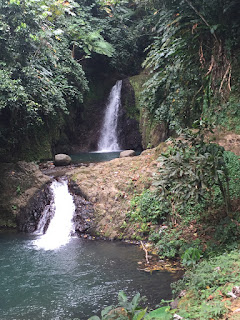
1) Seven Sisters Waterfall - Highly recommend going on a sunny day and take a tour guide.


2) Turtle watching - One of the best things I have done on the island to this day and would highly recommend it! People travel around the world to see leather back turtles lay eggs on the beaches of the caribbean islands. So, this is definitely a bucket list item.
3) River-tubing: lots of fun if you go with a lot of people. Just be prepared to get wet! (Sorry, we weren't allowed to take cameras, so I don't have pictures)
4) If you haven't done so already, visit the cliff on campus.


5) Visit Fort George:


I personally thought term 3 was straight forward as long as students keep up with lectures. My next few posts will provide tips/recommendations and my perspective of term 4 courses (Pathology, Microbiology, CPD, Nutrition). If there are any particular questions on term 4, please email me at meyouandsgu@gmail.com. I will address the questions in my next few posts.
Hope everyone is having a great summer! To the SGU students that started term 3 today, good luck for the upcoming term! :)
-N
Administrative Note:
I know when I started at SGU, I had a million questions that were unanswered until I started the work. So, this blog has the sole purpose to provide tips to incoming students, prepare students for class, and give insight on my perspective of my time in Grenada. I understand SGU is in the process of making changes to the curriculum. This blog will focus on experiences that I have as a medical student in Grenada. I plan to incorporate certain aspects of my life such as meal prepping into this blog, but the main focus will remain on medical school. If you have any questions, comments, or suggestions, feel free to email me at meyouandsgu@gmail.com.
Personal Spiel:
Over the course of term 3/4, a number of events took place in my life. Despite all that has taken place, I've learned that regardless of good or bad, it is important to remember the people who will always stay by your side. Medical school is not easy for anyone. There are days that your slide presentation for pathology goes extremely well and you ask excellent questions during the interview in CPD. However, there are also days filled with frustration and anger. So, I truly value those who talked to me and stuck by my side even if I had a horrible day. I just want to take a moment and thank my amazing family, my college roommates, and some of my best friends from high school who make up the best support team a girl could ask for. Also, to those that have continued to read the blog while I worked my way through term 4, I greatly appreciate your interest in the blog.
Ok, now for the actual catch-up on life:
In December (which seems like a century ago), I completed my term 2 finals, flew back to the US for the holidays, enjoyed my mom's fabulous cooking for a few weeks, and definitely caught up on some much needed sleep. Personally, I thought the end of term 2 was harder than anticipated. In addition to the three finals that I took (Immunology/Genetics, Physiology, and Neuroscience), term 2 students are also required to complete a OSCE examination and BSCE 1. The BSCE 1 is a end of year 1 of medical school exam. It is 4 hours long and integrates concepts from all classes taken during the first year of medical school. Although it does not go on any transcript, I think the result is valuable information to have as I prepare for future board exams. The results are systematically broken down by subject so students can clearly see their strengths and weaknesses.
At the beginning of January, I flew back to Grenada and started term 3. This specific term is 6 weeks long. Although there are 4 lectures per day and periodic small group discussions, students tend to have more time for themselves during this term. So, it is advisable to use the time touring the island and relaxing before term 4. There is a diverse array of material that is covered during the short term. A few of the main topics covered are as follows: Psychopathology, Biostatistics, Universal and United States Healthcare Systems, Bioethics, Epidemiology, Healthcare Law, Human development, Behavioral and Cognitive Development, Behavioral Sciences.
The following are some tips for surviving term 3:
1) Keep up with lectures. The midterm and final tend to sneak up quickly. Majority of the lecturers do a fantastic job highlighting the important information.
2) The small group discussions do not require much prep work, but do pay attention to the topic. There will probably be questions on the exam associated with material covered in small group.
4) have fun in term 3 because before you know it, term 4 will start. If you have time, it wouldn't be a bad idea to start skimming through pathoma (in my opinion, a must have) for term 4.
5) Term 3 students have an option of visiting the mental hospital in Grenada. I would highly recommend this experience. During my visit, my group was able to hear personal stories from 2 patients that were admitted to the facility.
The following are a few pictures from places I visited during term 3:
1) Seven Sisters Waterfall - Highly recommend going on a sunny day and take a tour guide.
2) Turtle watching - One of the best things I have done on the island to this day and would highly recommend it! People travel around the world to see leather back turtles lay eggs on the beaches of the caribbean islands. So, this is definitely a bucket list item.
4) If you haven't done so already, visit the cliff on campus.
5) Visit Fort George:


I personally thought term 3 was straight forward as long as students keep up with lectures. My next few posts will provide tips/recommendations and my perspective of term 4 courses (Pathology, Microbiology, CPD, Nutrition). If there are any particular questions on term 4, please email me at meyouandsgu@gmail.com. I will address the questions in my next few posts.
Hope everyone is having a great summer! To the SGU students that started term 3 today, good luck for the upcoming term! :)
-N
Failure and the Breakup
Written by J:
Failure
Three days after taking my physiology final exam, I sat in my dorm room anxiously waiting for scores to come out. I had done well in my other classes, even our comprehensive exam for year 1, the BSCE 1. My flight home would leave early the next morning, and I had just started to pack my things. Then it happened - later that morning I sat on my bed and refreshed Sakai, where I found out that I had failed physiology by 2 points (0.75%). At first I thought it was a mistake, so I added up all the possible points which, to my genuine surprise, came out to 200 like it was supposed to. In an instant, I was overcome with embarrassment, shame, astonishment, and a nagging question in the back of my mind of what I didn't do right. Suddenly, I didn't know if I was packing for the one month break until term 3, or for the rest of my life (if you're curious, I chose to pack for the former). I didn't eat or sleep much that night. I called ahead and took a taxi at 4am to the airport, several hours before I ever needed to. I didn't want to see or talk to anyone, I really just wanted to go home. Both of my parents came to pick me up at the airport that evening and I couldn't help but burst into tears at the gate.
SGU's policy for students who fail a course (no matter if by 2 points or 20), is to recommend them for automatic dismissal. Students may appeal the decision, which is reviewed by the deans and department chairs. The majority of students who appeal are not reinstated (I remember reading on forums that the numbers were something like 1 in 5). I decided to try and appeal. I wrote an honest explanation of what I did and what I will do if reinstated. I heard back from the committee 3 weeks later (1 week before classes started) that I would be reinstated, and I would have to retake physiology in the spring.
Aside from wasting 4 months of my life because of 2 points on an exam, coming back to Grenada in January was an incredibly defeating experience for a variety of reasons. Friends that I had known in the January entering class either completely stopped talking to me or had little more to say to me than "sorry." The few friends who talked to me even went as far as to say things like "what did you expect from this school?" or "didn't you use this resource" or "didn't you attend this person's DES session?" In passing, I've heard things like "How do you think failing a course would look like to residency directors?" or "wow if I had failed a class, I'd be buying a one way ticket home." For these reasons, and many more, I spent the better part of my "redemption semester" burning these bridges and being by myself - which turned out to be one of the best decisions I had made. Being a student at SGU can be an oddly tribal and divisive experience. People hear different things about exams from upper-termers, people get different advice, different books, different materials to study from. I found it frustrating because many of my friends would be selective about what resources they give or tell other people about, and I really just wanted to step outside of that circle.
It's hard to put into words what it feels like to retake a class at SGU. Without a doubt, getting an acceptance letter from SGU and making the decision to attend has to be one of the highlights of my life. Without a doubt, failing a class and being recommended to leave because of 2 points has to be an all-time low. Adding salt to that wound, some of the people who moved on to term 3/4 never went to class, yet still talk about me and others as if we're the ones who hadn't done something right. It took me a while to really embrace the fact that the students on this island will talk behind your back, and they will talk about absolutely everything. Some of my old friends gossiped to N and others about who I talk to, where they saw me, what I was doing, all without even saying so much as a hello to my face -- it still infuriates me to this day. That's when I learned this important lesson: sometimes, you've got to learn to outgrow certain people in your life.
Throughout the second half of the semester, I was able to better myself academically: I got an A on the midterm and a B on the final. I built an entirely new network of friends who, to my delight, support me academically, socially, and motivationally as much as I support them. I changed my faculty advisor. I lost 6 lbs without trying. I also run a small business, which I was able to take to heights which I could have never imagined. Finally, I was able to study ahead and get a solid head start for term 4. I'll go into depth into all of these points and more in an upcoming blog.
Thank you all for following our blog while we took a short hiatus. Talk to you soon - J
The Breakup
N and I had been together for several years, and we decided to take some time apart so that I could get myself back in order academically and emotionally. I think this helped us both because since she was busy in term 4, we didn't stress each other out as much and we learned to rely more on ourselves for support. N and I are still friends, and both of us will continue to contribute to this blog.
Advice and Silver Linings
Throughout the second half of the semester, I was able to better myself academically: I got an A on the midterm and a B on the final. I built an entirely new network of friends who, to my delight, support me academically, socially, and motivationally as much as I support them. I changed my faculty advisor. I lost 6 lbs without trying. I also run a small business, which I was able to take to heights which I could have never imagined. Finally, I was able to study ahead and get a solid head start for term 4. I'll go into depth into all of these points and more in an upcoming blog.
Thank you all for following our blog while we took a short hiatus. Talk to you soon - J
Immunology Quiz and Meal Prep Sunday
Sorry for the lack of posts lately. Finals are quickly approaching, we suddenly had a immunology quiz (more on that later), and the term is wrapping up. Today, I thought I would do a post on our immunology quiz that we had last week and a few meal prep ideas.
Immunology Quiz
The class was anticipating a quiz but didn't anticipate it to be in class. So, when we found out about that piece of information, the class frantically started studying for the quiz. The professors agreed that it would be beneficial for the class to take a timed, in-class quiz to better prepare for the finals. While I was studying for immunology, I simply did not understand why the professors would suddenly decide to give a quiz of this sort. In retrospect, they were correct. If it wasn't for the quiz, I would not have made time to re-study the 10-12 lectures. Now, a week after the quiz and 2 weeks before the final, I am so glad that reviewing those 10-12 lectures for the final will be much easier. I have plenty of other studying that I have to complete as well! We have a new professor for immunology this term so it was unclear how the questions would be structured on the quiz. However, as usual, I went through each lecture at least 4 times before the quiz and briefly looked over the Complement flow chart I had made pre-midterm (so glad I looked at the chart). I also found it helpful to make a chart for all the cytokines and the immunoglobulin lectures. For future Term 2 students, start memorizing cytokines early. The material builds up very quickly!
Meal Prep Sunday
Last week I decided to make 2 dishes for the week. The first is a dish I experimented with a few weeks ago and it turned out great. So, I made it again. It is a spicy Chinese eggplant dish with a hint of garlic and ginger. The recipe recommends green onions, but I used regular onions which worked out well too. I also added green peppers to the dish to prevent them from going bad this week! This dish has become one of my favorites. The second dish I made was a potato and onion preparation which I eat with bread or naan or tortillas. Although I got the idea from my mom a long time ago, it was my first time making it myself. I'm so glad it turned out better than expected. J and I cooked together last weekend and it took us about an hour to finish both dishes.
 |
Only 3 more weeks until we are back in the US for the holidays!!! Count down has officially begun! :)
A shout out to our deans who came and spoke to Term 2 students yesterday about a number of administrative and student-related issues. Thank you!
Hope everyone is having a great week! SGU students, only a few more weeks to go! Keep up the hard work! :)
Term 2 Midterms: Neuroscience
Warning: Long Post... Sorry!
Last midterm of the week was neuroscience! The neuroscience course is organized into modules. 7 modules make up the entire class. We had 4 modules worth of material on the midterm. The topics on the midterm were:
1) Neuroanatomy
2) Cellular Neuroscience
3) Developmental Neuroscience
4) Sensory Systems
Out of the 4 big topics, sensory systems had the most amount of lectures and most amount of questions on the exam. Developmental neuroscience consisted of about 4 lectures. Neuroanatomy and cellular neuroscience were taught early during the term and were covered on the unified quiz. Out of my three scores for midterms, surprisingly, neuroscience was my highest. Here are a few methods I studied for the exam and a couple of tips for future students.
Neuroanatomy:
1) Buy a hard copy of the Neuroscience atlas. I used the Haines 8th edition and would highly recommend it for future students. I think SGU recommends the 9th edition of the atlas, but majority of my friends have the 8th and it works well too.
2) Go through the atlas and highlight the structures you need to know. I highlighted the pages as I prepared for small group discussion on a weekly basis. When it came time to prepare for the exam, it became a lot easier to flip through the atlas and quickly review the structures.
Lectures:
1) Essential Notes! Essential Notes! Essential Notes!!! They are a life-saver for this class. The lecture slides are good, but the essential notes are gold!
2) Pre-read for the sensory system lectures. Sensory lectures are a lot of material that are compiled into a 50 minute overview. If you have pre-read the essentials, lecture will be more meaningful. I don't usually pre-read for all classes, but pre-reading for neuroscience helped me!
3) Red Glass Test: This is a clinically relevant test that is used evaluate a patient's visual field. It comes up during the vision lectures in the sensory module. I, personally, had a lot of trouble understanding this topic because I learned it incorrectly the first time. So, for future students, make sure you understand this topic well. We had about 2 or 3 questions on this on our midterm.
4) Developmental: This term, we had a visiting professor who taught 4 lectures on developmental neuroscience. Do not get too bogged down by all the small details. The questions on the exam are going to be straight forward. Think of developmental neuroscience as a story. To grasp the material thoroughly, I made a concept map.
5) Cellular: I relied on the essential notes and lectures made a lot of sense.
6) Pay attention in small group discussion because there are questions that will pop up on the midterm solely based on material covered in discussion session.
7) Do all the questions online (Sakai).
8) Sensory pathways: I drew each and every one out in different colors and then put it up on my wall. I ran through each of the pathways at least once a day until it was solid in my head.
9) During the sensory lectures, each pathway will go through parts of the brainstem. Some pathways are lateral. Some pathways are medial. I went through Haines atlas and highlighted where each pathway runs in each cross section of the brainstem.
This was a very quick exam. Typically we get a little over a minute/question in most classes. However, the neuroscience department added a lot of experimental questions (questions that the professors want to see how the students perform on so they can potentially add it to future exams), which are worth no points for our term. We had about 75 seconds per question. I am not sure if this will be the case for future terms. If it is, future neuroscience students, make sure you pace yourself. Neuroscience is a lot of material, but I think the clinical tests that are performed to determine a patient's neurological function are quite interesting. Our first module post-midterm is motor. Speaking of which, I should probably review today's lectures. Thank you for reading and have a wonderful day! :)
Last midterm of the week was neuroscience! The neuroscience course is organized into modules. 7 modules make up the entire class. We had 4 modules worth of material on the midterm. The topics on the midterm were:
1) Neuroanatomy
2) Cellular Neuroscience
3) Developmental Neuroscience
4) Sensory Systems
Out of the 4 big topics, sensory systems had the most amount of lectures and most amount of questions on the exam. Developmental neuroscience consisted of about 4 lectures. Neuroanatomy and cellular neuroscience were taught early during the term and were covered on the unified quiz. Out of my three scores for midterms, surprisingly, neuroscience was my highest. Here are a few methods I studied for the exam and a couple of tips for future students.
Neuroanatomy:
1) Buy a hard copy of the Neuroscience atlas. I used the Haines 8th edition and would highly recommend it for future students. I think SGU recommends the 9th edition of the atlas, but majority of my friends have the 8th and it works well too.
2) Go through the atlas and highlight the structures you need to know. I highlighted the pages as I prepared for small group discussion on a weekly basis. When it came time to prepare for the exam, it became a lot easier to flip through the atlas and quickly review the structures.
Lectures:
1) Essential Notes! Essential Notes! Essential Notes!!! They are a life-saver for this class. The lecture slides are good, but the essential notes are gold!
2) Pre-read for the sensory system lectures. Sensory lectures are a lot of material that are compiled into a 50 minute overview. If you have pre-read the essentials, lecture will be more meaningful. I don't usually pre-read for all classes, but pre-reading for neuroscience helped me!
3) Red Glass Test: This is a clinically relevant test that is used evaluate a patient's visual field. It comes up during the vision lectures in the sensory module. I, personally, had a lot of trouble understanding this topic because I learned it incorrectly the first time. So, for future students, make sure you understand this topic well. We had about 2 or 3 questions on this on our midterm.
4) Developmental: This term, we had a visiting professor who taught 4 lectures on developmental neuroscience. Do not get too bogged down by all the small details. The questions on the exam are going to be straight forward. Think of developmental neuroscience as a story. To grasp the material thoroughly, I made a concept map.
5) Cellular: I relied on the essential notes and lectures made a lot of sense.
6) Pay attention in small group discussion because there are questions that will pop up on the midterm solely based on material covered in discussion session.
7) Do all the questions online (Sakai).
8) Sensory pathways: I drew each and every one out in different colors and then put it up on my wall. I ran through each of the pathways at least once a day until it was solid in my head.
9) During the sensory lectures, each pathway will go through parts of the brainstem. Some pathways are lateral. Some pathways are medial. I went through Haines atlas and highlighted where each pathway runs in each cross section of the brainstem.
This was a very quick exam. Typically we get a little over a minute/question in most classes. However, the neuroscience department added a lot of experimental questions (questions that the professors want to see how the students perform on so they can potentially add it to future exams), which are worth no points for our term. We had about 75 seconds per question. I am not sure if this will be the case for future terms. If it is, future neuroscience students, make sure you pace yourself. Neuroscience is a lot of material, but I think the clinical tests that are performed to determine a patient's neurological function are quite interesting. Our first module post-midterm is motor. Speaking of which, I should probably review today's lectures. Thank you for reading and have a wonderful day! :)
Term 2 Midterms: Genetics/Immunology
Exam #2 during midterm week was Genetics/Immunology which are combined into one class called MIMG. The exam consisted of 80% genetics material and 20% immunology material. The teaching team for genetics is essentially the same professors that taught biochemistry during Term 1. I enjoyed the lectures from majority of the professors of biochemistry. So, I was glad that they lectured again in genetics. In addition, we had about 2 weeks of immunology before the midterm. I, personally, felt that the professor introduced a lot of new material just a few days before the midterm, which was a little overwhelming. The following are a few methods that I used to study for the unified and midterm. I hope these methods help future students succeed in MIMG.
1) Study the genetics slides like biochemistry slides. Genetics questions are going to be application- or fact-based questions focusing on the lecture slides.
2) The Patterns of Inheritance lectures were about 4 lectures and it is important to know each of the genetic principles that were introduced. For example, heteroplasmy is a term that is associated only with mitochondrial diseases. That is an association that is important to keep in mind. An exam question may state, MELAS is associated with which of the following principles? The answer choices will be 4-5 genetic principles and one of the answer choices will be heteroplasmy. So, the student needs to be able to identify that MELAS is a mitochondrial disease and associate heteroplasmy with mitochondrial diseases. This is a relatively easy type of question. It can become more challenging if the questions only gives a brief description of the disease or a list of symptoms and students will have to identify that it is a mitochondrial disease.
3) Make up mnemonics for the list of autosomal dominant, autosomal recessive, and X-linked recessive diseases that we were instructed to know. One of the first things I did during the exam was write the mnemonics at the top of my white board (Each student is given a small white board during the exam).
4) I reviewed the molecular diagnostic lecture about 5 times because I knew it would appear again and again on the midterm. In addition, I skimmed through the problem set for this lecture.
5) Do all the online/sakai questions.
6) I skimmed through the problem sets for the lectures that I thought were challenging.
7) Immunology: We have a new course director and professor covering the immunology material. The lectures pre-midterm are straight forward, except for the complement lecture. We had less amount of time to review the complement lectures. So, I made a big, fat concept map of the complement pathway, associated deficiencies, and diseases about 36 hours before the midterm. That map, of course, went up on my wall for about 24 hours before the exam. The immunology questions on the midterm were either straight forward or very difficult. In retrospect, I probably should have started memorizing the complement charts a few days earlier while I was studying for physiology.
I hope this helps future students prepare for MIMG. SGU students have a 4-day weekend for Thanksgiving. So, I hope everyone is having a relaxing and enjoyable long weekend! :)
1) Study the genetics slides like biochemistry slides. Genetics questions are going to be application- or fact-based questions focusing on the lecture slides.
2) The Patterns of Inheritance lectures were about 4 lectures and it is important to know each of the genetic principles that were introduced. For example, heteroplasmy is a term that is associated only with mitochondrial diseases. That is an association that is important to keep in mind. An exam question may state, MELAS is associated with which of the following principles? The answer choices will be 4-5 genetic principles and one of the answer choices will be heteroplasmy. So, the student needs to be able to identify that MELAS is a mitochondrial disease and associate heteroplasmy with mitochondrial diseases. This is a relatively easy type of question. It can become more challenging if the questions only gives a brief description of the disease or a list of symptoms and students will have to identify that it is a mitochondrial disease.
3) Make up mnemonics for the list of autosomal dominant, autosomal recessive, and X-linked recessive diseases that we were instructed to know. One of the first things I did during the exam was write the mnemonics at the top of my white board (Each student is given a small white board during the exam).
4) I reviewed the molecular diagnostic lecture about 5 times because I knew it would appear again and again on the midterm. In addition, I skimmed through the problem set for this lecture.
5) Do all the online/sakai questions.
6) I skimmed through the problem sets for the lectures that I thought were challenging.
7) Immunology: We have a new course director and professor covering the immunology material. The lectures pre-midterm are straight forward, except for the complement lecture. We had less amount of time to review the complement lectures. So, I made a big, fat concept map of the complement pathway, associated deficiencies, and diseases about 36 hours before the midterm. That map, of course, went up on my wall for about 24 hours before the exam. The immunology questions on the midterm were either straight forward or very difficult. In retrospect, I probably should have started memorizing the complement charts a few days earlier while I was studying for physiology.
I hope this helps future students prepare for MIMG. SGU students have a 4-day weekend for Thanksgiving. So, I hope everyone is having a relaxing and enjoyable long weekend! :)
J's Mental Burnout & Exam Week
Midterms didn't go as well for me as they did for N. I did OK in neuroscience and genetics, but I need to do a lot better in physiology. The bright side is that I did well enough that I don't need to think about deceling. Aside from physiology being a hard test, I think a big reason for my poor performance was anxiety. I just didn't "feel" like taking the exam, if that makes sense. In fact I was really dreading it in the week leading up to the exam. There are several reasons for this, and to some extent they reflect what student life is like at SGU.
One huge disadvantage of attending such a large medical school is that you're around so many other stressed out medical students. Some of my friends were really negative leading up to exam week, gossiping about how the midterm was incredibly difficult last term, how many people deceled, etc. Others were so positive and overconfident that they came off as jerks. In fact, my roommate told me on several occasions how he completed over 400 practice questions for physiology.
No matter how disciplined you are as a student, hearing these kinds of things day in and day out does affect your mental health. I felt stressed out, I wasn't getting restful sleep, I was downing 4 cups of coffee per day, I hadn't gone to the gym in a week and a half, and my diet largely consisted of heat and eat food that I bought at IGA. I'm pretty sure that if I had centered myself mentally, I could have done a lot better on my exam. SGU isn't out to get you, neither are your professors, or your friends....medical school is just hard, and you can really be your own worst enemy during exam week. For finals, I'll really be trying to work on this aspect of myself. I'll let you know how it goes! -J
One huge disadvantage of attending such a large medical school is that you're around so many other stressed out medical students. Some of my friends were really negative leading up to exam week, gossiping about how the midterm was incredibly difficult last term, how many people deceled, etc. Others were so positive and overconfident that they came off as jerks. In fact, my roommate told me on several occasions how he completed over 400 practice questions for physiology.
No matter how disciplined you are as a student, hearing these kinds of things day in and day out does affect your mental health. I felt stressed out, I wasn't getting restful sleep, I was downing 4 cups of coffee per day, I hadn't gone to the gym in a week and a half, and my diet largely consisted of heat and eat food that I bought at IGA. I'm pretty sure that if I had centered myself mentally, I could have done a lot better on my exam. SGU isn't out to get you, neither are your professors, or your friends....medical school is just hard, and you can really be your own worst enemy during exam week. For finals, I'll really be trying to work on this aspect of myself. I'll let you know how it goes! -J
Term 2 Midterms: Physiology
To those that read this blog, I am sorry for the lack of posts for the past few weeks. We have been preoccupied with midterm week. Last week consisted of some ups, some downs, coffee, minimal sleep, and a lot of studying. On top of studying, SGU true blue campus faced intermittent internet loss and interruption of electricity for a few hours which led our AC to reset to off for a few days. I am so so glad that all those problems have been fixed. Although midterm week started off rough, it ended well! :)
After midterms, most students evaluate their scores and try to make changes on how they study to prepare adequately for finals. So, I thought I would dedicate the next few post to tips for term 2 midterms, how I prepared, and changes in my study plan for finals. Today's post will be focused on the Physiology midterm. I hope to have a post up about each one of the midterms by the end of the week! :)
Physiology
Physiology was our first exam of the week. The exam covered the first 5 units of material which include the following: cell, autonomic nervous system (ANS), pharmacology, muscle, and cardiac physiology. Our class accidentally got instant feedback on a score, which caused a lot of anxiety and anger. However, we had to remember that physiology was only one exam and we still had 2 more major exams (Genetics/Immunology and Neuroscience) for the rest of the week. Here are a few tips and methods I used to study for my physiology exam.
1) Cell, ANS, and pharmacology were all on the Unified quiz for Physiology. So, I thoroughly studied these units for a previous test. Therefore, it was easier to review for the midterm.
2) ANS: I had a huge table of all the drugs that we needed to know and put it up on my wall in my room. Because it was up on my wall, I looked at the chart several times a day and eventually I was able to identify names, functions, and category of drug. This is super helpful to learn the material because some of the drugs are applicable for the cardiac material as well. For future term 2 students, the drug list is discussed in lecture only a few days before the unified quiz. So, start memorizing early.
3) Heart cycle: I hand drew a Wigger's diagram with each line in a different color and put it up on my wall in my room. A few days before the midterm, I read through the essential notes for that specific lecture to confirm that I had covered everything. I also drew a complete pressure/volume graph with the potential changes that can take place (Clearly, my wall looked pretty snazzy last week, haha)
4) GRAPHS GRAPHS GRAPHS!!! I did not count how many graphs we had on our test, but WOW, it was a lot. KNOW GRAPHS.
5) I did a ton of MOTO questions. There are over 600 questions for the cardiac section. For future students, start working on those early.
6) For some reason, the material that was covered during the muscle section seemed like a blur compared to the amount of time that was spent on the cardiac lecture. So, I had to go over the muscle material quite a few times. I made a huge chart for muscle to help me understand the similarities and differences between skeletal, cardiac, and smooth muscle.
7) Not only understand the content in each lecture, but know how to apply it to different clinical situations.
8) Sakai quizzes (practice quizzes that the department posts online) were also helpful initially to assess my understanding on specific topics.
Based on my midterm score, am I going to change anything before finals?
Although I did fine on the midterm, I still have areas that I want to improve upon before the final. So, my two key areas of focus are starting practice questions earlier and paying very very close attention to graphs that are highly emphasized in class.
Feel free to let us know if you have any questions. Our next post will be about the Genetics/Immunology midterm and hopefully will be up shortly. Hope everyone's week is going great! :)
After midterms, most students evaluate their scores and try to make changes on how they study to prepare adequately for finals. So, I thought I would dedicate the next few post to tips for term 2 midterms, how I prepared, and changes in my study plan for finals. Today's post will be focused on the Physiology midterm. I hope to have a post up about each one of the midterms by the end of the week! :)
Physiology
Physiology was our first exam of the week. The exam covered the first 5 units of material which include the following: cell, autonomic nervous system (ANS), pharmacology, muscle, and cardiac physiology. Our class accidentally got instant feedback on a score, which caused a lot of anxiety and anger. However, we had to remember that physiology was only one exam and we still had 2 more major exams (Genetics/Immunology and Neuroscience) for the rest of the week. Here are a few tips and methods I used to study for my physiology exam.
1) Cell, ANS, and pharmacology were all on the Unified quiz for Physiology. So, I thoroughly studied these units for a previous test. Therefore, it was easier to review for the midterm.
2) ANS: I had a huge table of all the drugs that we needed to know and put it up on my wall in my room. Because it was up on my wall, I looked at the chart several times a day and eventually I was able to identify names, functions, and category of drug. This is super helpful to learn the material because some of the drugs are applicable for the cardiac material as well. For future term 2 students, the drug list is discussed in lecture only a few days before the unified quiz. So, start memorizing early.
3) Heart cycle: I hand drew a Wigger's diagram with each line in a different color and put it up on my wall in my room. A few days before the midterm, I read through the essential notes for that specific lecture to confirm that I had covered everything. I also drew a complete pressure/volume graph with the potential changes that can take place (Clearly, my wall looked pretty snazzy last week, haha)
4) GRAPHS GRAPHS GRAPHS!!! I did not count how many graphs we had on our test, but WOW, it was a lot. KNOW GRAPHS.
5) I did a ton of MOTO questions. There are over 600 questions for the cardiac section. For future students, start working on those early.
6) For some reason, the material that was covered during the muscle section seemed like a blur compared to the amount of time that was spent on the cardiac lecture. So, I had to go over the muscle material quite a few times. I made a huge chart for muscle to help me understand the similarities and differences between skeletal, cardiac, and smooth muscle.
7) Not only understand the content in each lecture, but know how to apply it to different clinical situations.
8) Sakai quizzes (practice quizzes that the department posts online) were also helpful initially to assess my understanding on specific topics.
Based on my midterm score, am I going to change anything before finals?
Although I did fine on the midterm, I still have areas that I want to improve upon before the final. So, my two key areas of focus are starting practice questions earlier and paying very very close attention to graphs that are highly emphasized in class.
Feel free to let us know if you have any questions. Our next post will be about the Genetics/Immunology midterm and hopefully will be up shortly. Hope everyone's week is going great! :)
J's Term 2 Update
In all honesty, term 2 has been bittersweet. On one hand, I'm not running around as much with labs, small groups and DES sessions (peer tutoring on campus). However I'm spending a lot more time at a desk learning one concept after another. Although it's good on one hand because I'm able to learn quickly and move on to the next topic, it's a lot more secluded and independent even if you schedule time to work in groups with other students.
Physiology is really a fun class. We go into detail about some not-so-obvious questions about the body. I took a physio class during my masters degree, but I've noticed that it's completely different here at SGU. It's not enough to know the concepts, you've got to completely master them, be able to answer questions directed from many different angles, and to top it off you've got to learn drugs and therapies that treat disease. It's heavy, but like I said if you are curious about the body, this class will be satisfying. In addition, Dr. Clunes is an awesome lecturer.
Neuroscience is another awesome class. The diseases we learn about in neuroscience are either incredibly odd or incredibly severe. Either way, this class will leave you interested. The content itself is not difficult to grasp, however the exams can be worded in tricky ways, so remember to have good test taking technique.
Like we mentioned elsewhere on the blog, Genetics and Immunology are taught in one class called MIMG (medical immunology and medical genetics). So far, this class has been super boring for me. Basically, genetics is like a continuation of biochemistry from first term. You just have to "know" the content on the slides and be able to apply a few key concepts (like what genetic test to order, and what probabilities of inheritance are). I really dislike this class for this reason - I feel like the faculty know that everything we need to know is basically on the slides, so they (with the exception of Dr. Upadhaya) aren't as effective as the other professors at delivering memorable lectures that stick with you. However I'm trying extra hard to do well in genetics because it's becoming more important for US board exams.
More updates to come. Have a good weekend! -J
Physiology is really a fun class. We go into detail about some not-so-obvious questions about the body. I took a physio class during my masters degree, but I've noticed that it's completely different here at SGU. It's not enough to know the concepts, you've got to completely master them, be able to answer questions directed from many different angles, and to top it off you've got to learn drugs and therapies that treat disease. It's heavy, but like I said if you are curious about the body, this class will be satisfying. In addition, Dr. Clunes is an awesome lecturer.
Neuroscience is another awesome class. The diseases we learn about in neuroscience are either incredibly odd or incredibly severe. Either way, this class will leave you interested. The content itself is not difficult to grasp, however the exams can be worded in tricky ways, so remember to have good test taking technique.
Like we mentioned elsewhere on the blog, Genetics and Immunology are taught in one class called MIMG (medical immunology and medical genetics). So far, this class has been super boring for me. Basically, genetics is like a continuation of biochemistry from first term. You just have to "know" the content on the slides and be able to apply a few key concepts (like what genetic test to order, and what probabilities of inheritance are). I really dislike this class for this reason - I feel like the faculty know that everything we need to know is basically on the slides, so they (with the exception of Dr. Upadhaya) aren't as effective as the other professors at delivering memorable lectures that stick with you. However I'm trying extra hard to do well in genetics because it's becoming more important for US board exams.
More updates to come. Have a good weekend! -J
Time Management in Medical School
Every student that enters medical school has a general idea of how they are going to structure their day, study for classes efficiently, and make time to "live a life". As much as I support such a plan, some weeks, it is very difficult to stick to a plan and very often students find themselves falling behind. While I was going through term 1, I realized that I had to manage my time better because I simply was not getting enough sleep. I would stay up late, wake up early, drink coffee, and still be behind. It was about this time last term that I re-strategized my study plans and found ways to be more efficient. Here are a few methods that I used to become more efficient.
1) If you have read our previous posts, you can probably tell I am an advocate of meal prep. Does it actually save time? Yes, it does. Instead of venturing out to eat or cooking every night, if I cook once a week, I find my week a lot more productive. Typically by Sunday nights, I have finished grocery shopping and cooking. Then I know that my meals for the week are relatively planned out. For example, this week, I wanted both a family favorite dish (an okra dish eaten with flatbread/tortilla/naan) and some pasta. So, I made both. I made one dish on Sunday night and one on Monday night. Did it take a lot of time from studying? No, I devoted about 1 hour per night to make each dish. Now, I have more than enough food for the rest of the week. If I hadn't cooked earlier this week, I probably would have spent about an hour cooking or picking up food from a local restaurant per night. So, it would have taken more time away from studying.
 |
| Don't know what I do differently, but my mom's version of this dish tastes so much better! |
 |
| Delicious! |
2) Don't dedicate too much time to one lecture. I try to stick to a 2-3 hour maximum for reviewing each lecture. Some of my friends set an alarm. When the alarm goes off, they must move on to reviewing another lecture. This also motivates students to focus on the material for a set period of time and try to beat the alarm. If I see myself not understanding the concept and just wasting time, I simply skip the slide and make sure I return to it over my weekend review. That way, I can move on to the other lectures/labs that I need to review for the day.
3) Remember to sleep. There are several studies that have found that sleep is associated with memory and focused attention. With minimal sleep, sitting in lecture may turn into a perpetual nap session, which is simply unproductive.
4) If you don't finish reviewing all the lectures of the day, it is ok. At the beginning of the term, I struggled with this concept. I would try to review every lecture as soon as it was taught. That is an ideal situation and what students should strive for, but may not happen over every weekday. Just make sure that the lecture is reviewed and understood over the following weekend.
5) Schedule breaks during the week. Whether it is having dinner with a friend or talking to family or taking a walk, these breaks help me clear my mind before I get back to studying. Typically, I am a lot more productive after these breaks compared to if I study for several hours in a row. Plus, Grenada has some of the most picturesque beaches and waterfalls in the world. So, definitely take advantage and explore the island that you call home for about two years. I understand that doing well in school is important, but spending an hour at the beach/waterfall over a weekend is not a crime.
 |
| Grand Anse Beach 2015 |
 |
| Annandale Waterfall 2015 |
6) Try to finish labs and small group discussion preparation work over the weekend and leave reviewing lectures for the weekdays. Especially during Term 1, I used to finish histology lab preparations and most of my anatomy lab preparation while I was reviewing the associated lectures over the weekends. It made my life a little easier during the week.
I am no expert in time management, but these tricks helped me during medical school and hope it helps you too!
Floods, Fire alarms, and oh yea Unifieds
This week has been one of a kind. On top of studying for unifieds, the fire alarm went off in my apartment building at 4 am last week. This has happened before, but it usually was in the day time. So, students were either in class and not sleeping. Hopefully the 4 am building fire alarm doesn't happen again! On top of that, we had a leak that started a few weeks ago and progressively got worse and worse in the suite. The weekend before unifieds, my roommates and I had to deal with the problem to prevent complete flooding of our apartment. Thank you to the housekeeping team who mopped our floor multiple times and the maintenance department who FINALLY fixed the problem!
Ok, enough of that "negative nancy" talk. Let's talk about unifieds. We had unifieds last Monday for Genetics, Neuroscience, and Physiology. For term 2, unifieds are 20 questions each and 30 minutes per exam. For neuroscience and physiology, unifieds are worth 10 points. So, essentially each question on those exams are worth 0.5 of a point. For genetics, the score on unifieds is worth 20 points. So, each question is worth 1 point. As stressful as they are, unifieds are a nice way for students to determine whether their method of studying is working out well for them. If not, students have time to go see advisors/professors and revise their study strategy. Personally, unifieds went well. Better than expected, but I definitely have areas that I want to improve upon before midterms.
Last weekend was a complete study weekend before exams. So, I did not have enough time to cook for the week, but I did finish grocery shopping. After my exam on Monday, I was sleep-deprived, tried, and hungry. So, making stir fry was the first thing that popped into my head. I made a large batch of stir fry with beans, baby corn, green pepper, and onion. Delicious!
I'm so glad it is Friday! Aren't you? Happy Friday! :)
Ok, enough of that "negative nancy" talk. Let's talk about unifieds. We had unifieds last Monday for Genetics, Neuroscience, and Physiology. For term 2, unifieds are 20 questions each and 30 minutes per exam. For neuroscience and physiology, unifieds are worth 10 points. So, essentially each question on those exams are worth 0.5 of a point. For genetics, the score on unifieds is worth 20 points. So, each question is worth 1 point. As stressful as they are, unifieds are a nice way for students to determine whether their method of studying is working out well for them. If not, students have time to go see advisors/professors and revise their study strategy. Personally, unifieds went well. Better than expected, but I definitely have areas that I want to improve upon before midterms.
Last weekend was a complete study weekend before exams. So, I did not have enough time to cook for the week, but I did finish grocery shopping. After my exam on Monday, I was sleep-deprived, tried, and hungry. So, making stir fry was the first thing that popped into my head. I made a large batch of stir fry with beans, baby corn, green pepper, and onion. Delicious!
 |
Subscribe to:
Posts (Atom)